

 US (EN)
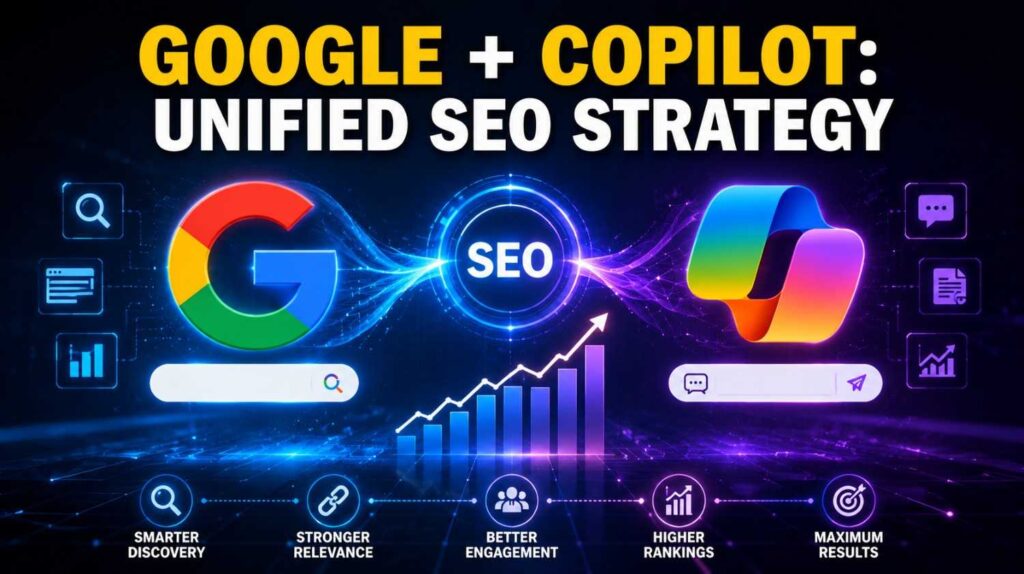
Search is no longer limited to typing keywords into a search engine and browsing through pages of results. Today, users expect immediate, conversational, and accurate answers from both traditional search engines and AI-powered assistants. Google continues to dominate organic search, while Microsoft Copilot is reshaping how people discover information through artificial intelligence.
For businesses, this shift means that optimizing for Google alone is no longer enough. A modern digital marketing strategy must also prepare content for AI-powered search experiences. This is where a Unified SEO Strategy becomes essential. By combining Search Engine Optimization (SEO), Answer Engine Optimization (AEO), and Generative Engine Optimization (GEO), businesses can maximize visibility across both Google Search and Microsoft Copilot.
Organizations serving customers throughout Canada and the USA can gain a significant competitive advantage by embracing this integrated approach to digital marketing.
Why Search Has Changed
Consumer behavior has evolved rapidly over the last few years. Instead of searching with short keyword phrases, people now ask complete questions using natural language.
For example, a customer might ask Google for local service providers while using Microsoft Copilot to compare solutions or request personalized recommendations. Both platforms influence purchasing decisions, making it important for businesses to appear consistently across each search experience.
A unified strategy ensures your website is prepared for both traditional search rankings and AI-generated responses.
Understanding Google’s Role
Google remains the foundation of online discovery. Businesses still depend on strong organic rankings to generate qualified traffic and build long-term visibility.
Google evaluates websites based on factors such as content quality, technical performance, keyword relevance, page experience, backlinks, and user engagement.
Although Google’s search experience continues to evolve with AI features like AI Overviews, traditional SEO remains an essential component of every successful digital marketing strategy.
Strong Google optimization creates the foundation that supports broader AI visibility.
Understanding Microsoft Copilot
Microsoft Copilot introduces a different way of finding information. Rather than displaying only website links, Copilot generates conversational answers using information gathered from trusted online sources.
Businesses that create authoritative, well-organized, and informative content have a better chance of being referenced in these AI-generated responses.
Appearing within Copilot recommendations increases credibility while introducing your business to users who prefer conversational search experiences.
Why SEO, AEO, and GEO Work Better Together
A unified strategy combines three complementary optimization methods.
Search Engine Optimization (SEO) improves visibility within traditional search engines through technical excellence, keyword optimization, website performance, and high-quality content.
Answer Engine Optimization (AEO) structures content to provide clear, direct answers that search engines and AI assistants can easily interpret.
Generative Engine Optimization (GEO) enhances how artificial intelligence platforms understand, evaluate, and reference your website when generating responses.
When these three approaches work together, businesses gain broader visibility across multiple search environments while building stronger online authority.
Building Content for Both Google and Copilot
Content remains the foundation of successful digital marketing.
Instead of creating articles solely around keywords, businesses should focus on solving customer problems with clear, informative, and well-structured content. Use descriptive headings, concise explanations, and natural language that reflects how people actually ask questions.
Regularly updating content with current information helps maintain accuracy, while structured data allows search engines and AI systems to better understand each page.
Internal linking also improves website organization and encourages users to explore related content.
By creating valuable resources rather than keyword-focused articles, businesses improve their chances of performing well across both Google and Microsoft Copilot.
Common Challenges Businesses Face
Many organizations continue relying exclusively on traditional SEO while overlooking AI-powered search opportunities.
Publishing thin content, neglecting website performance, ignoring structured data, and failing to answer customer questions clearly can reduce visibility across both Google and Copilot.
Another common mistake is treating SEO, AEO, and GEO as separate marketing strategies instead of integrating them into one comprehensive approach.
Businesses that focus on user experience, expertise, and trustworthy information consistently achieve better long-term results.
Preparing for the Future of Search
Artificial intelligence is not replacing search engines—it is enhancing how people interact with them. Google continues introducing AI-powered features, while Microsoft expands conversational search through Copilot.
Future-proof businesses are those that optimize for both traditional search engines and AI assistants simultaneously.
A unified SEO strategy helps organizations remain visible regardless of how search technology evolves. As customer expectations continue changing, businesses with AI-friendly content will be better positioned to attract new audiences and maintain competitive advantages.
Conclusion
Google and Microsoft Copilot represent two essential components of the modern search ecosystem. Businesses that optimize for only one platform risk missing valuable opportunities to reach potential customers.
By integrating SEO, AEO, and GEO into a unified strategy, organizations can improve visibility, strengthen authority, and increase qualified traffic across traditional search engines and AI-powered platforms alike. Investing in this approach today prepares your business for the future of digital marketing while supporting sustainable long-term growth.
Frequently Asked Questions
A unified SEO strategy combines traditional SEO with Answer Engine Optimization (AEO) and Generative Engine Optimization (GEO) to improve visibility across Google Search and AI-powered platforms like Microsoft Copilot.
Customers use both traditional search engines and AI assistants to find information. Optimizing for both increases online visibility and improves opportunities to reach potential customers.
Yes. Traditional SEO remains the foundation of online visibility, while AEO and GEO extend your reach into AI-powered search experiences.
AEO focuses on creating clear, direct answers that search engines and AI assistants can easily understand and present to users.
GEO improves how AI systems interpret, trust, and recommend your website content within conversational search platforms.
Absolutely. Businesses of all sizes can improve search visibility, build authority, and attract more qualified leads by combining SEO, AEO, and GEO.
Geo SEO Services helps businesses implement a complete SEO, AEO, and GEO strategy that improves visibility across Google Search, Microsoft Copilot, Google AI Overviews, ChatGPT, Bing, Gemini, and Perplexity. Through AI-focused content creation, technical optimization, structured data implementation, and search strategy development, Geo SEO Services enables businesses to achieve sustainable online growth and stronger digital authority throughout Canada and the USA.