

 US (EN)
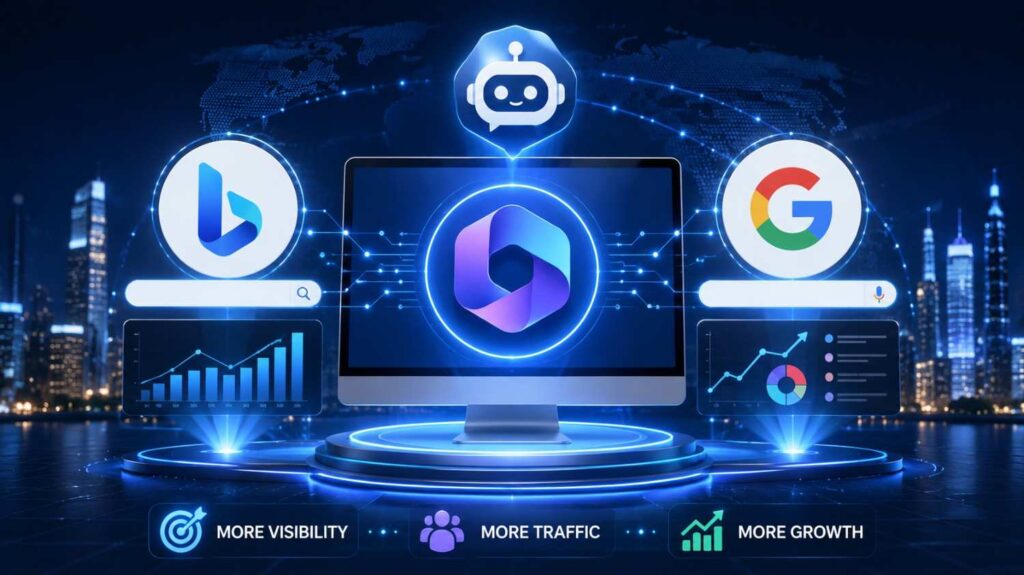
Search is no longer confined to a single platform. Today’s users discover businesses through Google Search, Microsoft Bing, and AI-powered assistants like Microsoft Copilot. Instead of relying solely on traditional search rankings, businesses now need a strategy that ensures visibility across all three platforms. This approach is known as triple visibility.
As AI-powered search continues to reshape the digital landscape, organizations that optimize for Search Engine Optimization (SEO), Generative Engine Optimization (GEO), and Answer Engine Optimization (AEO) gain a significant competitive advantage. These strategies work together to improve visibility in search results, AI-generated answers, and conversational search experiences.
In this guide, you’ll learn why optimizing for Copilot, Bing, and Google is becoming the new standard for digital marketing and how your business can maximize online visibility.
Understanding Triple Visibility
Triple visibility means your business is discoverable across three major search ecosystems:
- Google Search for traditional organic rankings.
- Microsoft Bing for web search and indexing.
- Microsoft Copilot for AI-generated answers powered by Bing’s search technology.
Instead of depending on one search engine, businesses create a comprehensive digital presence that reaches users wherever they search.
This strategy increases:
- Organic traffic
- Brand authority
- AI citations
- Customer trust
- Lead generation
- Long-term online visibility
Why Google, Bing, and Copilot Matter
Google Search
Google remains the world’s most widely used search engine. Ranking well on Google continues to drive significant organic traffic and brand awareness.
However, Google has introduced AI Overviews, providing AI-generated summaries directly within search results. Businesses must now optimize content for both traditional rankings and AI visibility.
Microsoft Bing
Bing powers millions of searches worldwide and serves as the foundation for Microsoft Copilot.
Strong Bing optimization improves:
- Organic rankings
- AI discoverability
- Indexing speed
- Visibility within Microsoft’s ecosystem
Ignoring Bing means missing opportunities to appear in both Bing Search and Copilot responses.
Microsoft Copilot
Copilot represents the next generation of search.
Rather than displaying only links, Copilot analyzes trusted web sources and delivers conversational answers.
Businesses with structured, authoritative, and AI-friendly content have a higher chance of being referenced within Copilot-generated responses.
The Role of SEO, GEO, and AEO
Search Engine Optimization (SEO)
Traditional SEO focuses on improving visibility through:
- Keyword optimization
- Technical SEO
- Backlinks
- Internal linking
- Mobile optimization
- Page speed
SEO remains the foundation of digital success.
Generative Engine Optimization (GEO)
GEO helps AI systems understand and trust your content.
It focuses on:
- Topical authority
- Entity optimization
- Structured content
- AI readability
- Comprehensive information
- Semantic relevance
GEO increases the likelihood that AI platforms will reference your content.
Answer Engine Optimization (AEO)
AEO ensures your content directly answers user questions.
It emphasizes:
- Question-based headings
- Clear explanations
- Conversational language
- FAQ sections
- Schema markup
- User intent
AEO improves visibility across AI assistants like Microsoft Copilot and Google AI Overviews.
Strategies to Achieve Triple Visibility
1.Create Comprehensive Content
Develop in-depth resources that thoroughly answer user questions.
Cover related topics to build topical authority rather than publishing isolated blog posts.
2.Optimize for Conversational Search
People increasingly search using natural language.
Instead of targeting only keywords, answer questions like:
- What is GEO?
- How does Microsoft Copilot work?
- Why is AI search important?
- How can businesses rank in Google AI Overviews?
Conversational content performs better in AI-generated search experiences.
3.Implement Structured Data
Schema markup helps search engines and AI understand your website.
Recommended schema includes:
- Organization
- Article
- Service
- FAQ
- Breadcrumb
- Local Business
- Person
Structured data strengthens AI comprehension and improves search visibility.
4.Build Strong E-E-A-T Signals
Google and AI platforms prioritize websites that demonstrate:
- Experience
- Expertise
- Authoritativeness
- Trustworthiness
Publish expert-written content, customer testimonials, case studies, and regularly updated information to improve credibility.
5.Optimize Technical Performance
Technical SEO continues to play a critical role.
Focus on:
- Fast page loading
- Mobile responsiveness
- HTTPS security
- Clean site architecture
- XML sitemaps
- Proper indexing
- Core Web Vitals
Technical excellence benefits both traditional search engines and AI platforms.
Benefits of Triple Visibility
Businesses implementing SEO, GEO, and AEO across Google, Bing, and Copilot can expect:
- Increased organic traffic from multiple platforms
- Greater brand recognition
- Improved AI-generated citations
- Higher user trust and credibility
- Better lead generation opportunities
- Enhanced customer engagement
- Long-term digital marketing resilience
Instead of relying on one traffic source, triple visibility creates a diversified and sustainable online presence.
Preparing for the Future of AI Search
Artificial intelligence is transforming how users discover information and interact with search engines. Businesses that optimize only for traditional rankings risk losing visibility as AI-generated answers become more common.
A future-ready digital strategy should combine:
- Search Engine Optimization (SEO)
- Generative Engine Optimization (GEO)
- Answer Engine Optimization (AEO)
- Technical SEO
- Content authority
- Structured data
- AI-friendly content creation
By integrating these elements, businesses can remain competitive across Google, Bing, Microsoft Copilot, and future AI-powered search platforms.
Final Thoughts
The future of online visibility depends on more than ranking first on Google. Businesses must also establish authority within Bing and AI assistants like Microsoft Copilot.
A comprehensive strategy that combines SEO, GEO, and AEO enables organizations to achieve triple visibility, reaching customers across traditional search engines and AI-powered answer platforms.
Geo SEO Services helps businesses throughout Canada and the USA maximize their online presence with advanced Search Engine Optimization (SEO), Generative Engine Optimization (GEO), and Answer Engine Optimization (AEO) solutions. Our experts optimize websites for Google Search, Google AI Overviews, Microsoft Bing, Microsoft Copilot, ChatGPT, Gemini, and Perplexity AI, helping businesses build authority, improve AI visibility, generate qualified traffic, and achieve sustainable long-term growth.
Frequently Asked Questions
Triple visibility refers to optimizing your website to perform well across Google Search, Microsoft Bing, and AI-powered platforms like Microsoft Copilot, ensuring broader online reach.
Microsoft Bing powers Microsoft Copilot and serves millions of users worldwide. Optimizing for Bing increases both search engine visibility and AI-generated citations.
Copilot analyzes trusted web sources, understands user intent, and generates conversational responses. Well-structured, authoritative content is more likely to be referenced.
Generative Engine Optimization (GEO) helps AI platforms understand, trust, and cite your content, improving visibility in AI-generated search experiences.
Yes. AEO structures your content into clear, direct answers that AI assistants can easily interpret and present to users.
Absolutely. Fast-loading pages, mobile optimization, secure websites, proper indexing, and structured data all support both traditional SEO and AI search visibility.
Businesses should combine SEO, GEO, and AEO with high-quality content, schema markup, topical authority, technical optimization, and strong E-E-A-T signals to remain visible across Google, Bing, Microsoft Copilot, and future AI-powered search platforms.